Enterprise website design Solutions for Advanced organizational requirements in Syracuse
Why large-scale web design Represent for Complex Organizations
Enterprise web design is far beyond creating a refined homepage. For companies with multiple departments, product lines, service areas, or compliance requirements, it requires building a digital experience that can support complex requirements without sacrificing usability or growth potential. A strong enterprise site is designed to be scalable, adaptable, and structured for long-term performance.
For businesses in Syracuse, NY, this often includes balancing internal goals across leadership, marketing, IT, legal, sales, and customer service. That kind of stakeholder alignment is essential because enterprise websites rarely serve a single audience. They need to support prospects, clients, applicants, partners, and employees, regularly at the same time.
A successful enterprise build starts with a technical foundation that can adapt as the organization grows. That includes a scalable architecture, structured content models, and a system for managing updates across teams. Without that foundation, even the best-looking site can become difficult to maintain, slow to improve, and inconsistent in quality.
In practice, enterprise projects demand careful planning around governance, workflows, and measurable outcomes. The goal is not just to launch a website. It is to create a digital platform that improves user experience, supports internal efficiency, and strengthens brand authority over time.
Core Features of a High-Output Enterprise Website
Top-performing enterprise sites are built around a few key functions. First is UX design, which guides how visitors move through the site and whether they can rapidly find the information they need. For complex organizations, UX/UI design must account for different audience segments, multiple content paths, and decision-making stages that vary by department or service line.
Next is CMS integration. A robust content management system allows internal teams to manage updates effectively while keeping templates, components, and publishing rules aligned. For larger organizations, this often includes CMS migration from legacy platforms, which requires thorough planning to preserve content, retain search visibility, and reduce downtime.
Security is another non-negotiable priority. Enterprise websites handle sensitive forms, internal workflows, and user data, so security and compliance must be built into the project from the start. That includes secure hosting, access controls, update protocols, and ongoing monitoring. For regulated industries such as healthcare, education, and manufacturing in Central New York, these safeguards are especially important.
Performance optimization also plays a major function. Enterprise websites often include large media libraries, dynamic content, and third-party tools, all of which can affect speed. A site that loads quickly and behaves reliably across devices improves engagement, supports conversion-focused experiences, and builds credibility with visitors.
Sunstone Digital Tech201 E Jefferson St, Syracuse, NY 13202
(315) 758-3349
https://maps.app.goo.gl/LNcnKZaUXSqxHPoT8
https://sunstonedigitaltech.com/
43.0471862, -76.1504376
When these features work together, the website becomes a business asset rather than a maintenance burden. It supports communication, sales, recruitment, and service delivery with higher efficiency.
What is the way that Web Design, SEO Services, and Digital Marketing Work Together
Organizational success depends on an aligned approach. Strong site design builds the user experience and technical structure; SEO solutions increase search visibility; and digital marketing generates traffic and demand. When these efforts are disconnected, companies often end up with attractive pages that do not rank, campaigns that send traffic to weak landing pages, or content that fails to convert.
Effective design supports conversion optimization by guiding visitors toward the next step, whether that means requesting a demo, contacting sales, applying for a position, or downloading a resource. SEO then ensures those high-value pages are discoverable through relevant keywords and local search intent. Digital marketing amplifies the message through email, paid media, social channels, and content distribution.
This is especially relevant for Syracuse businesses competing in local and regional search. An organization serving the Syracuse metropolitan area and nearby Central New York communities needs more than a generic web presence. It needs pages that reflect the services it offers, the markets it serves, and the queries potential customers actually use.
Technical search optimization matters here as well. Clean site structure, optimized metadata, schema, crawl efficiency, and internal linking all support performance. The design team and SEO team should work together from the beginning, not after launch. That collaboration improves ranking potential, strengthens prospect generation, and helps the site attract higher-quality traffic.
In a complex enterprise environment, web design, seo services, digital marketing should be treated as one connected growth system rather than separate functions.
Applying AI Experts to Enhance Enterprise Web Strategy
Today’s enterprise websites see major improvements from AI experts who can uncover opportunities for automation, personalization, and deeper data analytics. AI is far beyond a trend; in the right hands, it becomes a powerful tool for increasing efficiency and enhancing the visitor experience.
For example, workflow automation can decrease repetitive manual tasks across lead routing, content tagging, support triage, and reporting. This allows internal teams to focus on strategy rather than administration. Automation also minimizes the risk of human error, which is especially valuable when many departments contribute to a single website ecosystem.
Personalization is another area where AI can add measurable value. Enterprise websites often serve diverse audiences, and not every visitor needs the same information. AI-supported personalization can adapt content recommendations, calls to action, or pathways based on behavior, industry, location, or lifecycle stage. That makes the site more relevant and more results-oriented.
AI also strengthens decision-making through analytics and reporting. Rather than relying on surface-level metrics, enterprise teams can use smarter segmentation and pattern detection to understand engagement trends, content performance, and lead quality. This data-driven approach helps organizations sharpen messaging and optimize campaigns with more confidence.
For Syracuse companies in education, healthcare, manufacturing, and B2B services, AI can help simplify complex digital ecosystems while improving performance at scale. The key is to implement AI strategically, with clear goals and governance, rather than treating it as a stand-alone feature.
Technical Considerations of Enterprise Websites
Sites at scale require thorough technical planning to maintain stability, speed, and accessibility. Adaptive design is the starting expectation. Visitors use phones, tablets, laptops, and large desktop displays, so the interface must respond fluidly across screen sizes. A mobile-first approach is particularly valuable because it forces clarity, prioritization, and stronger content hierarchy.
Website architecture is another key component. Enterprise websites often contain hundreds or thousands of pages, so navigation and URL structure must be organized, scalable, and easy to maintain. A well-planned architecture improves usability, supports technical SEO, and helps users find content without friction.
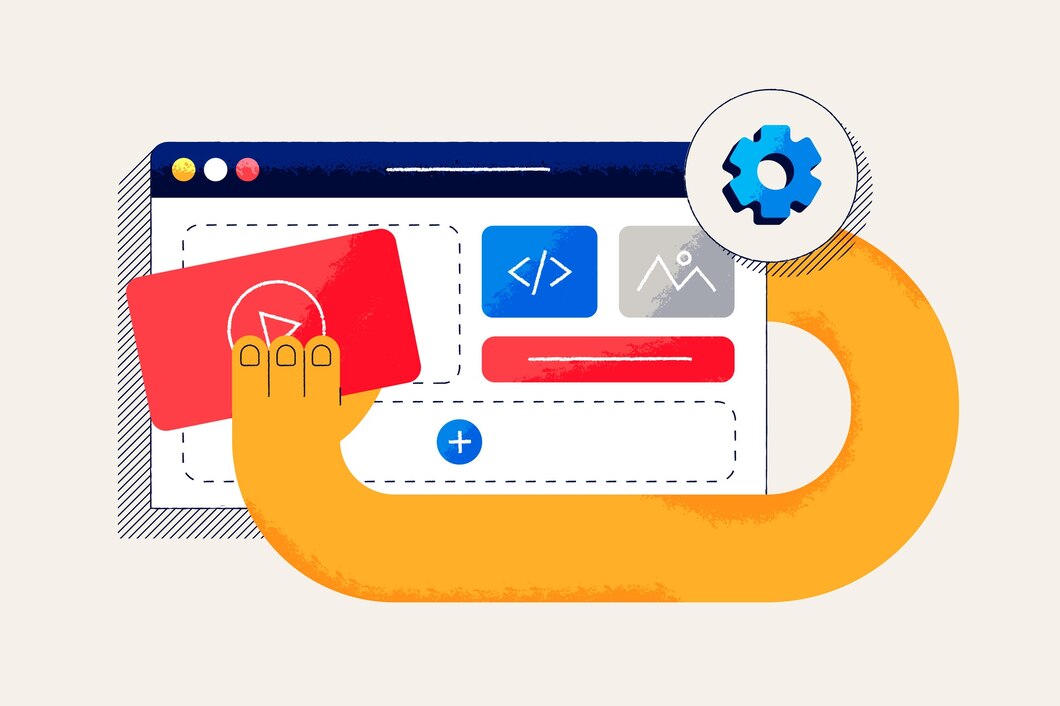
System integrations are common in enterprise environments. A site may need to connect with CRM systems, ERP platforms, marketing automation tools, scheduling software, payment processors, or internal databases. These connections must be designed carefully to ensure data accuracy, performance, and security.
Web accessibility must also be built in from the start. Inclusive design improves the experience for all users, including those relying on assistive technologies. For many organizations, ADA compliance is part of this effort. Accessibility should be addressed through semantic structure, contrast, keyboard navigation, alt text, form labels, and consistent interaction patterns.
Last but not least, scalable hosting matters because traffic spikes, content growth, and feature expansion can quickly strain underpowered infrastructure. Enterprise websites need robust environments that support performance, security, backups, and uptime. When the technical foundation is strong, the organization can scale with confidence.
Content Planning for Various Divisions and Visitors
Enterprise websites often have difficulty not because of design flaws, but because of content complexity. Different divisions want visibility, yet not every message should be placed on the home page or site navigation. Strong content governance creates rules for how content is requested, created, evaluated, authorized, and updated.
That governance helps maintain branding consistency across all pages and initiatives. It makes sure the organization sounds like one company, even when different departments contribute to the site. A consistent tone, wording, and visual style build trust and support brand authority.
Content should also reflect distinct user journeys. A prospective customer, a candidate, a procurement officer, and a current client may all visit the same site for different needs. The website must direct each audience through a logical path with the appropriate details at the proper moment. That requires a careful messaging hierarchy that organizes what is most important to each segment.

For enterprise teams, this is where preparation and content discipline pay off. Content should be formatted for clear reading, search visibility, and action. It should answer real questions, support engagement, and lower the friction that often occurs when sites try to speak to everyone at once.
When messaging strategy is aligned with business goals, the website becomes easier to manage and more successful as a communication platform.
The reason Syracuse, NY Businesses Require Region-specific online expertise
Businesses in Syracuse, NY and throughout Central New York face a unique mix of chances and market pressure. The region includes academic institutions, health services, manufacturing, professional services, and B2B firms that often serve both local and regional markets. That means digital strategy must account for local intent, broader service-area visibility, and industry-specific expectations.
Local SEO is especially important important for businesses competing in Syracuse and nearby communities. A company may serve not only the city itself, but also surrounding Central New York locations where search behavior and business needs vary. Strong local signals, relevant service pages, and location-aware content help businesses appear https://fulton-ny-tl391.yousher.com/how-much-do-web-design-services-pricing-in-2026 in the right searches and attract the right audience.
This is where local digital expertise becomes a real advantage. A team that understands the regional market can create messaging that reflects how Syracuse customers search, what they value, and how they compare providers. That insight improves relevance and credibility while supporting search visibility in a crowded landscape.
For example, a healthcare provider may need patient-focused content with clear access points, while a manufacturer may need technical service pages built for procurement and operations teams. A B2B organization may need thought leadership and conversion paths tailored to regional buyers. Local context helps shape all of these experiences.
In Syracuse and across Central New York, the best digital strategies are grounded in both enterprise capability and regional understanding. That combination improves reach, trust, and lead quality.
Picking the Ideal Enterprise Web Design Partner
Choosing the ideal partner for enterprise work requires more than reviewing a portfolio. Seek demonstrated agency experience with extensive, complex builds that involve multiple audiences, technical integrations, and structured governance. A qualified partner should grasp both design and business operations, not just visual presentation.
Project management is also important. Enterprise initiatives move through many stages, often with multi-stakeholder approval across departments. The partner should have a process for timelines, feedback collection, dependencies, and decision tracking. Absent that discipline, projects can stall or drift away from their original goals.
Strong partners also bring a solid grasp of analytics. They should define success metrics, build reporting frameworks, and use data to guide future improvements. This capability matters long after launch because enterprise websites should evolve based on actual performance, not guesswork.
Finally, look for ongoing support. Enterprise websites are living systems that require updates, optimization, content changes, and technical oversight. A partner should be prepared to support the site after launch through maintenance, enhancements, and strategic consultation. That continuity protects the investment and keeps the website aligned with business priorities.
The best partner will help connect design, SEO services, digital marketing, and AI-driven improvements into a coherent long-term roadmap.
Tracking ROI and Extended Website Performance
Enterprise websites should be measured by results, not just aesthetics. Clear KPIs help organizations understand whether the site is supporting business goals. These may include organic traffic growth, form submissions, qualified inquiries, job applications, content engagement, and revenue-influenced conversions.
Lead capture is frequently one of the most important results. Yet volume alone is not enough. Teams should evaluate lead value as well, since a site that draws the wrong visitors may generate activity without business value. That where alignment between visual design, content messaging, and SEO becomes critical.
Engagement metrics such as page time, scroll depth, click paths, return visits, and content interaction can show how well the site supports user needs. These metrics help teams find friction points, validate content priorities, and refine the overall experience.
Conversion optimization should be an ongoing process, not a one-time task. By testing page layouts, calls to action, forms, and content paths, organizations can boost performance steadily over time. That continuous optimization is especially valuable for enterprise teams with long sales cycles or multiple audience types.
Ultimately, the ROI of enterprise web design is measured through better visibility, stronger engagement, higher-quality leads, and a more efficient digital operation. When supported by analytics and reporting, these outcomes become easier to track and improve.
FAQ
What makes enterprise web design different from standard web design?
Enterprise web design supports larger organizations with multiple audiences, departments, workflows, and technical requirements. It usually includes scalable architecture, CMS integration, security and compliance, accessibility, and governance that standard web design projects may not need at the same level.
In what way do SEO services support enterprise websites with complex needs?
SEO services help enterprise websites improve search visibility, organize large site structures, and attract qualified traffic across many page types. They also support technical SEO, local SEO, and content planning so the site can compete effectively while serving different audiences and business goals.
Why should Syracuse businesses partner with local digital marketing experts?
Local digital marketing experts know the Syracuse, NY market, Central New York search behavior, and the regional business landscape. That insight enables organizations to produce more relevant content, improve local SEO, and perform better for visibility across the Syracuse metropolitan area and nearby communities.
How can AI experts enhance website performance and personalization?
AI experts can use automation, personalization, and data analytics to simplify workflows and enhance the user experience. They may help direct leads, tailor content paths, uncover performance patterns, and support data-driven optimization that increases engagement and conversion outcomes.
What should an enterprise web design partner provide after launch?
After launch, an enterprise web design partner should provide ongoing support, analytics and reporting, technical maintenance, content updates, and optimization guidance. They should also help the organization continue enhancing conversion rate optimization, accessibility, SEO, and overall website performance.